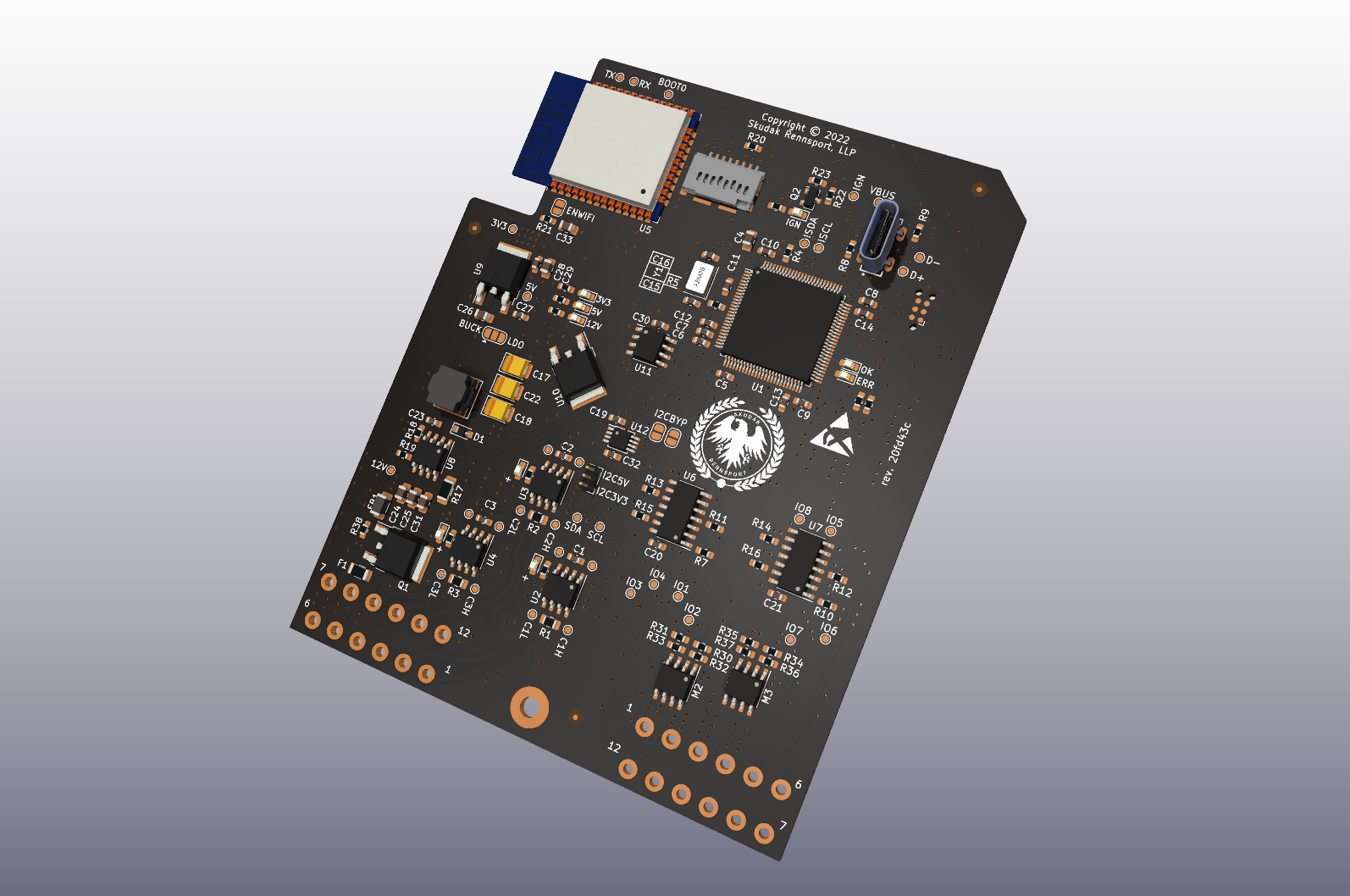
After countless hours, we finally believe we are approaching the final revision of the VCU ready to ship to customers or install on commissioned EV conversions.
Overall Features
From the initial idea, we set out to create a VCU (Vehicle Control Unit) platform to allow integration and conversions builds as compatible as possible with various hardware such as BMS (Battery Management Systems), DC-DC Converters, Electric Water Pumps, Electric Cabin Heaters, Electric Power Steering, Electric Motors (primarily Tesla), and more.
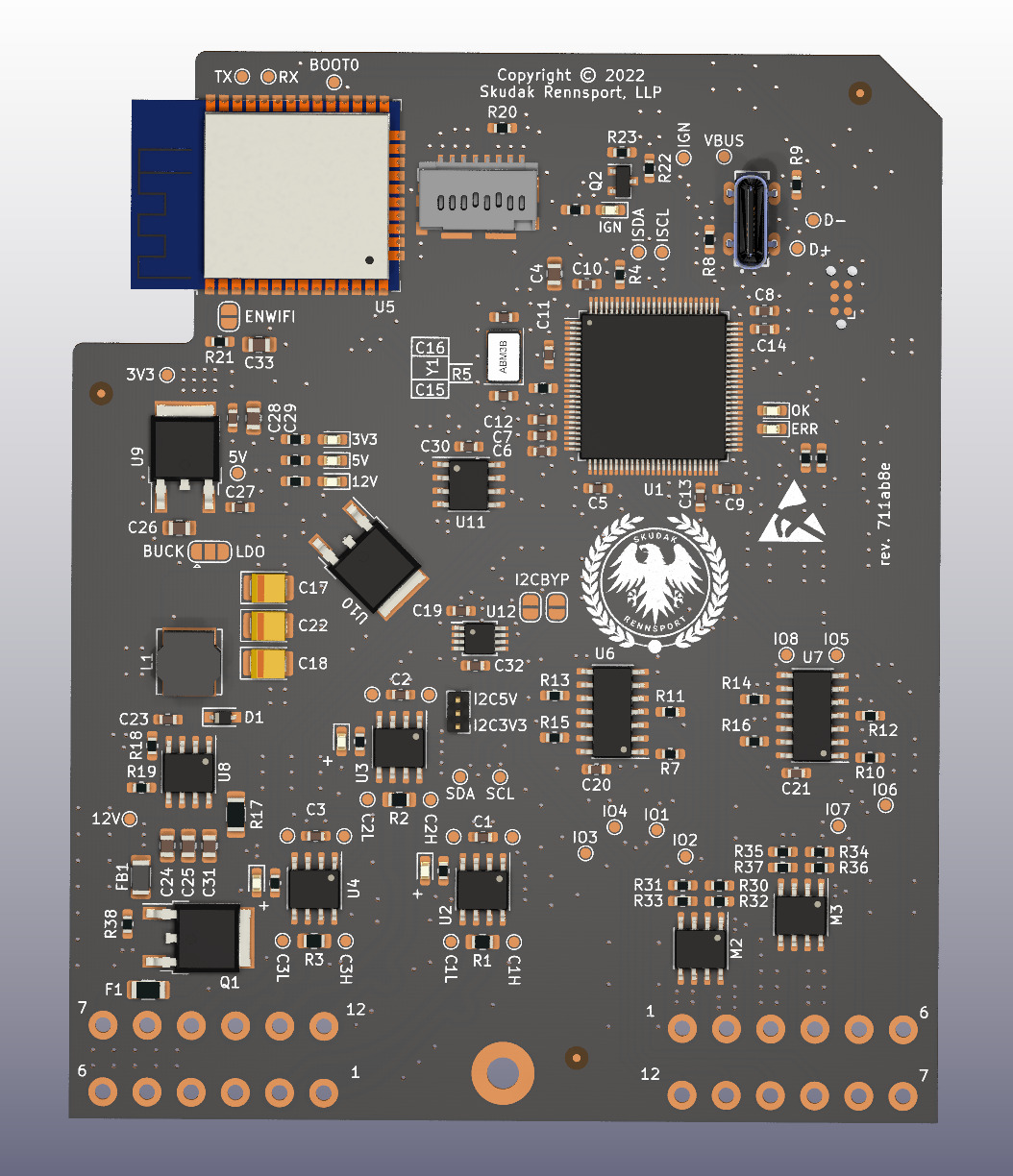
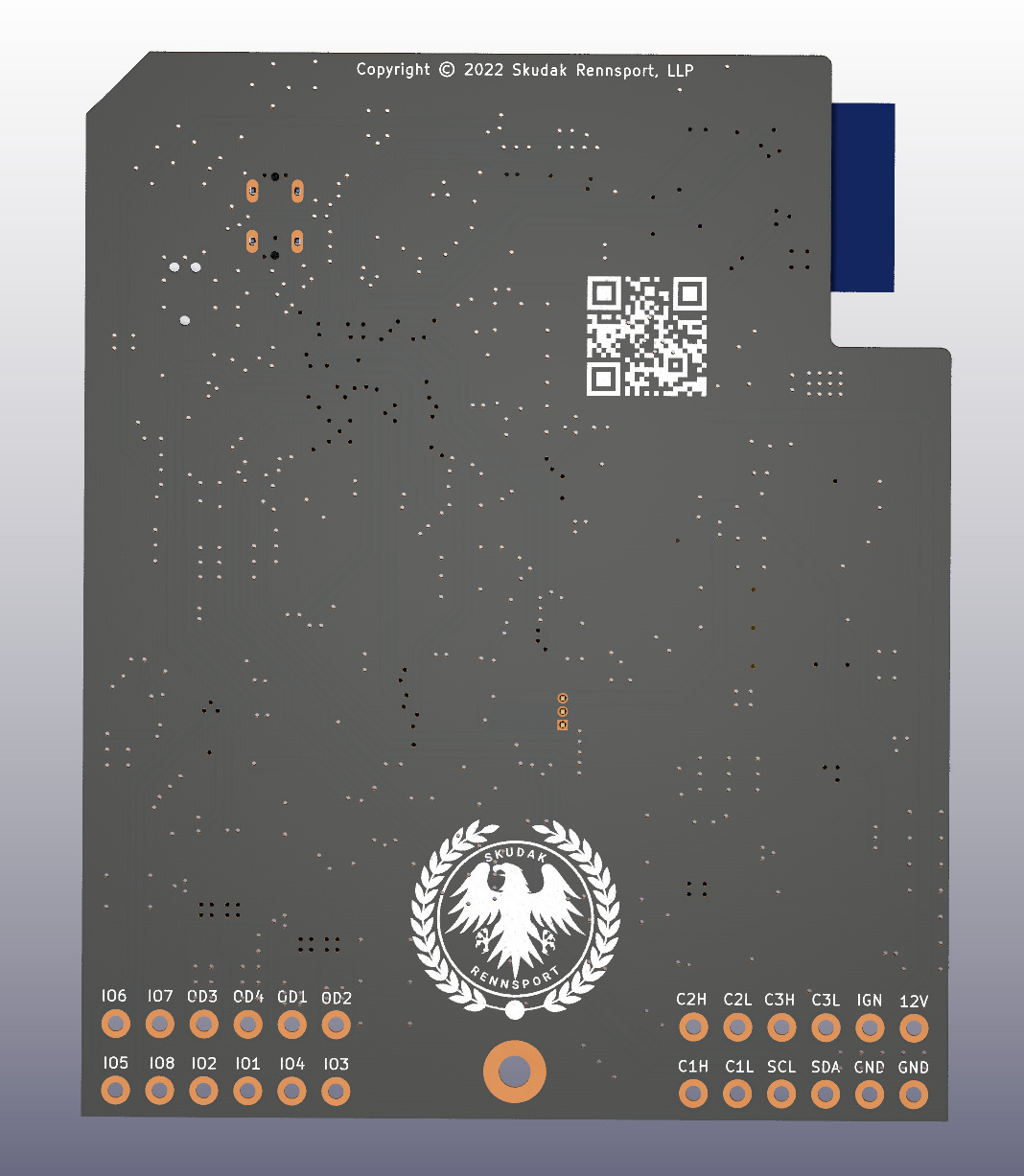
Although we cannot explicitly test our hardware and software for every possible variety, we included peripherals to allow as much flexibility as possible with a specific automotive-grade form factor. This list of controllable peripherals as of the current revision includes:
- 3x CAN Modules at configurable baudrates
- 1x I²C for external communication with selectable 3.3V or 5V level shifting
- 1x SD-Card Slot for data logging or customized configuration
- 1x I²C EEPROM for storing customized configurations
- 8x General Purpose buffered 5V outputs
- 4x Open-Drain (4A Max/ea) outputs
- Optional 1x 802.11 b/g/n (WiFi) module for firmware updates and main VCU communication
- Optional 1x USB Type-C programming and debugging connector
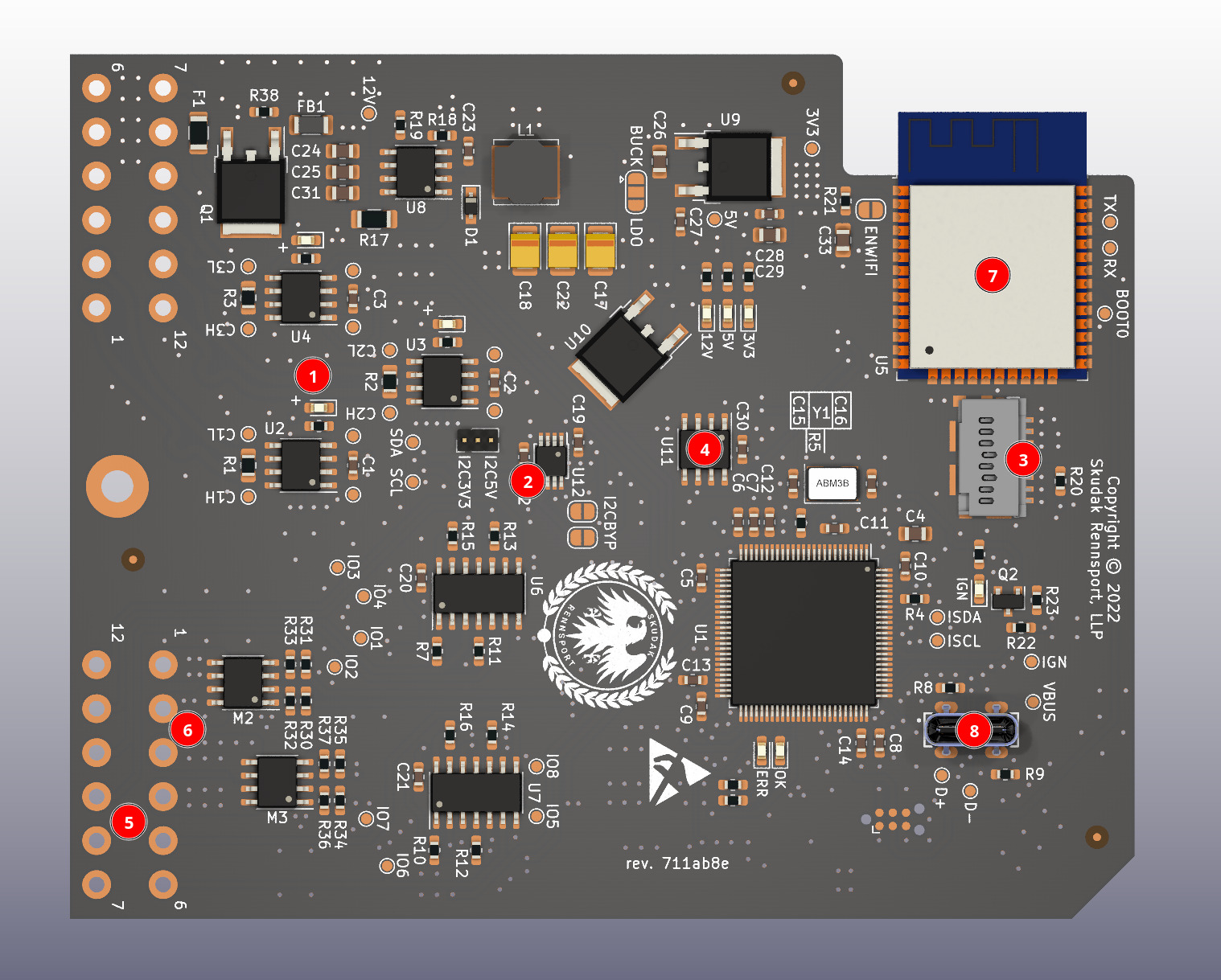
As we have not outsourced any engineering work, and have done all the hardware design, layout, and software in-house, we have established a VCU platform that is easy for us to readily push new updates to and provide component level support for.
Current State of VCU
As of writing this, there are still quite a few features the VCU does not yet support. However, customers will receive lifetime updates for the platform ordered to be manually updated via the integrated (optional) WiFi module/USB Type-C connector. With all the necessary hardware peripherals on-board, additional features can easily be added as they roll out to new firmware updates.
There are other, more general planned features that are not hardware specific. We hope to keep close communications with customers for providing feedback and feature requests. As we may not have physical access to conduct testing of our VCU on differing platforms from our initial Chevy Volt BMS and Tesla Model S proof-of-concept, we will have to work closely with customers who opt-in to receive remote "beta" firmware builds with features, or customization, for their specific platforms.
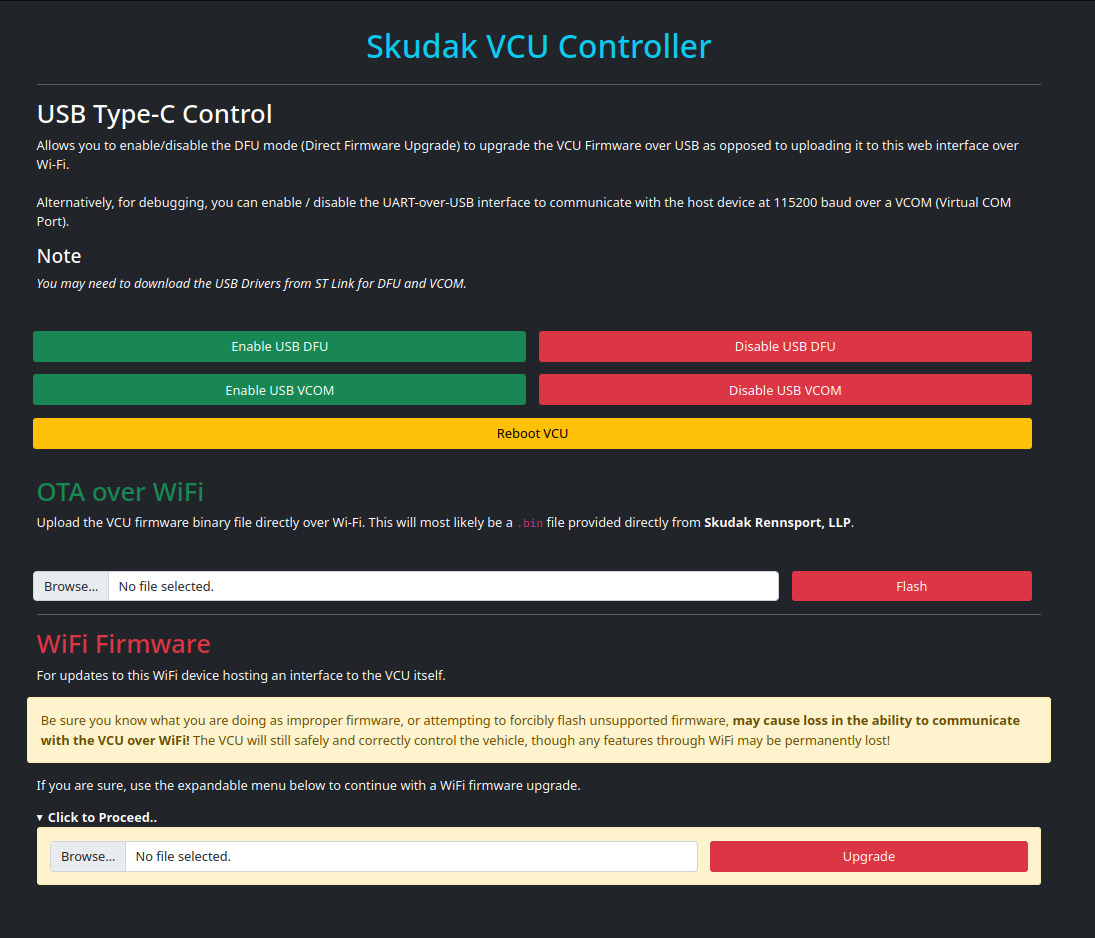
The current WiFi module hosts a simple website allowing the user basic control such as:
- Flashing both the VCU firmware and the WiFi firmware
- Enabling/Disabling USB-based DFU (Direct Firmware Upgrade)
- Enabling/Disabling USB-based VCOM (RS232 Virtual COM Port)
- Rebooting the VCU
Guides and Usage
Once we have fully tested the latest, finalized revision of our hardware, we plan to write up formal documentation of our best-guess coverage of all topics users may want to know about. Understanding that this will be an iterative process, we look forward to working with you in updating our documentation and support for this and future devices.
Feature Requests and Support
Alongside finalizing the VCU design, we are exploring ideas on how to establish quick, easy, and effective communication channels for both customers to connect with us, submit feature requests to be tracked as part of roadmap items, and fast responses on support issues. If there are recommendations or preferences you have, please don't hesitate to let us know either via e-mail or our social media links.